
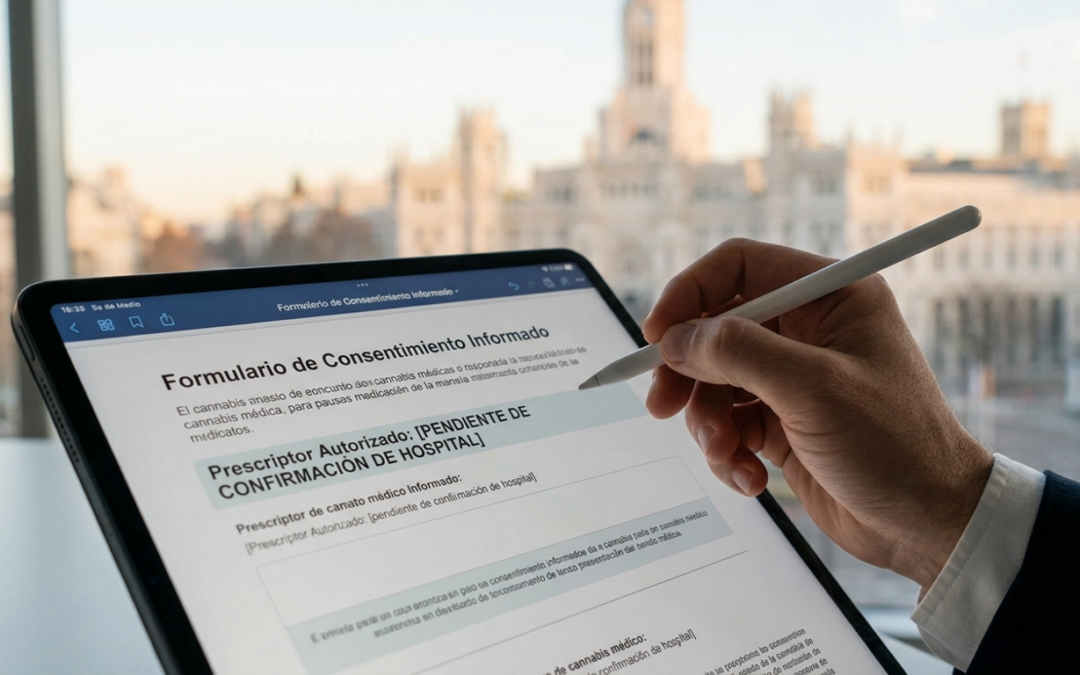
Consider, for example, a UK clinic preparing to enter the Spanish market. The team has done the work: website localised into Spanish, products cleared for import, a compliance officer embedded in the operational structure. They’ve translated the intake forms, the informed consent documents, the follow-up communications. By any reasonable measure, they are ready.
Then someone asks a simple question: which hospital has agreed to prescribe?
That question is, however, not bureaucratic friction. This is the first sign that the model they’ve built their entire business around has no legal equivalent in the Spanish market. It is also one of the most common structural errors in medical cannabis market expansion across Europe. The team had localised all documents correctly. Yet the model was not.
Crucially, this is the distinction that most cannabis companies miss before they start. Moreover, it is expensive to discover it after you’ve already moved.
The UK model: private clinic, telemedicine, home delivery
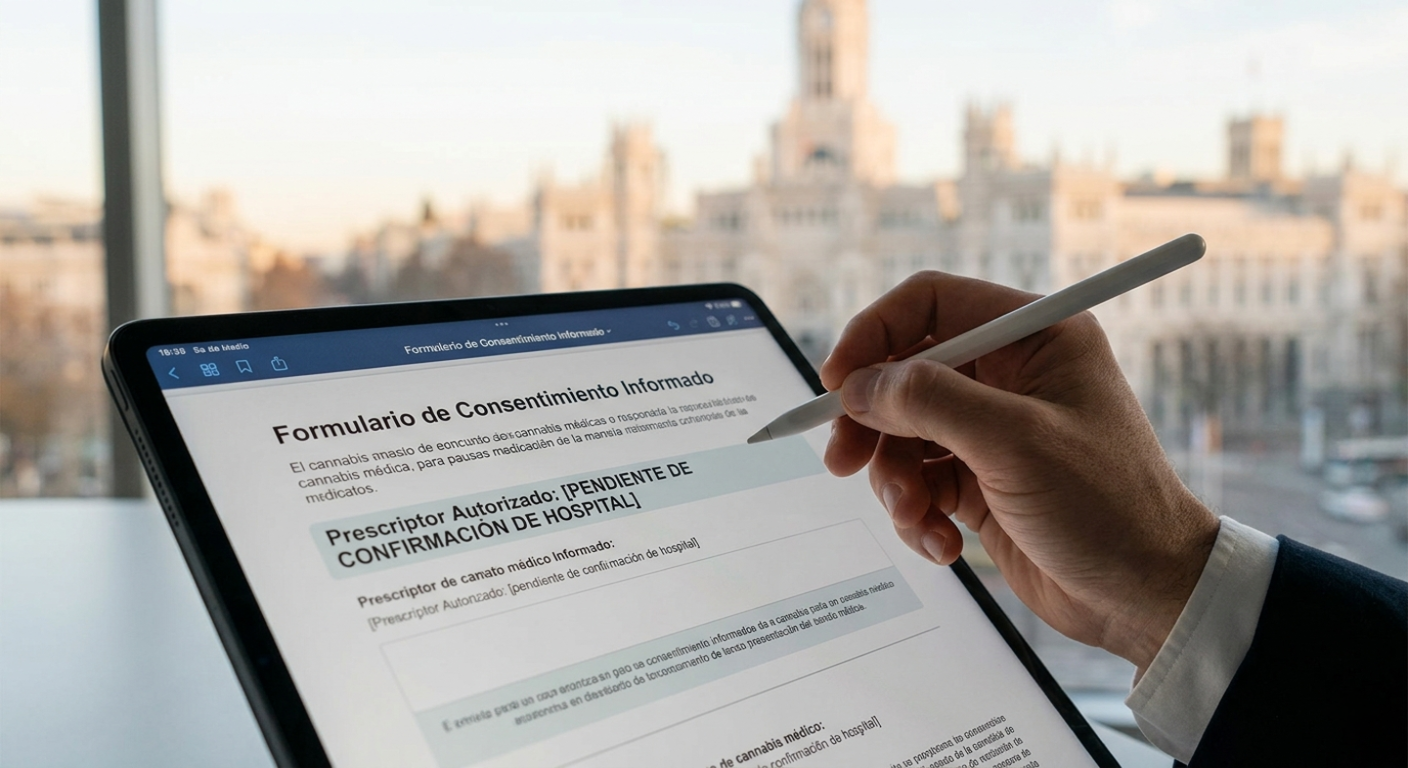
The UK private cannabis clinic model is coherent and well understood by anyone operating within it. Under the MHRA framework, specialist doctors can prescribe unlicensed medicinal cannabis products through a private consultation, most of which now happen via telemedicine. The patient finds a clinic online, books an appointment, pays privately, receives a prescription, and has their medication delivered to their home.
Accordingly, that model generates a specific set of documents. For example, intake forms that capture symptom history and previous treatments. Informed consent documents that explain the nature of unlicensed prescribing. Consultation notes in a specific clinical format.
Additionally, the clinic designs follow-up communications to keep the patient engaged with the clinic, not with an NHS pathway. Prescription records that sit entirely within the clinic’s own system.
It works. This model scales. It has run long enough that the documents feel settled, almost standard.
The problem is that every section of those documents was written to describe a specific access pathway. When you localise them, you are not just translating language. You are transplanting the assumptions built into every field, every clause, every instruction.
Spain: how medical cannabis prescription actually works under RD 903/2025
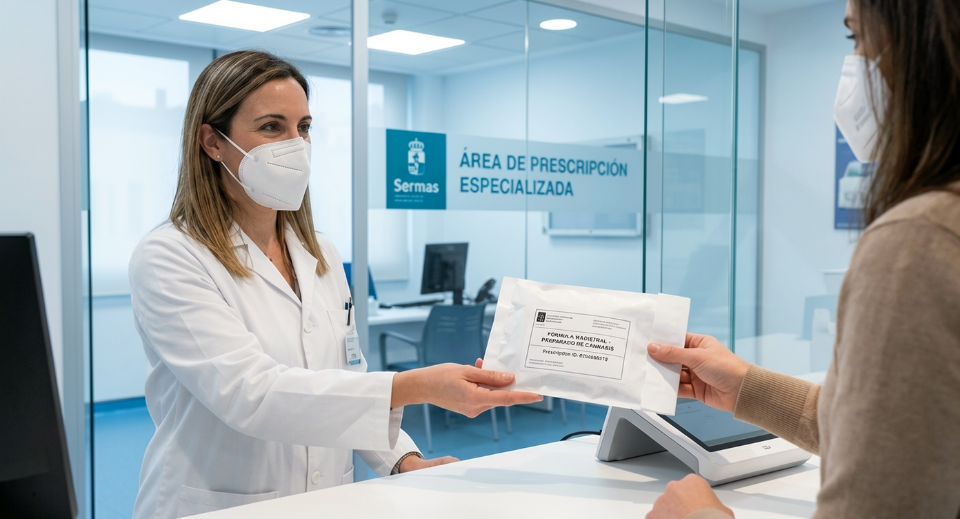
Spain published Royal Decree 903/2025 in October 2025, giving the country a specific legal framework for medicinal cannabis for the first time. The structure it describes bears no resemblance to the UK model.
Prescription authority is reserved for hospital specialists. This is not a preference or a default: it is a legal requirement. Dispensing takes place exclusively through hospital pharmacies. The access pathway runs through the public and semi-public hospital system, not through private clinics operating at a distance.
As a result, a UK-style telemedicine clinic cannot replicate its model in Spain and operate legally. There is no regulatory category for it.
The informed consent document that says “your specialist has reviewed your case” is accurate in the UK context. In Spain, it raises an immediate question: which specialist, at which hospital, authorised under which protocol?
Indeed, language in the document may be flawless. The model it assumes does not exist.
Germany’s MedCanG: a third medical cannabis prescription model

Germany often appears on expansion shortlists because it decriminalised personal use in 2024 and because its pharmacy infrastructure is extensive and well-organised. Both of these things are true. Neither of them means the UK model transfers cleanly.
Under the MedCanG, medicinal cannabis is available on prescription and dispensed through community pharmacies. Telemedicine prescribing is currently permitted. But the regulatory ground is shifting in a specific direction.
In July 2025, the Federal Ministry of Health presented a draft bill proposing to ban remote prescription and mail-order sale of medical cannabis entirely, requiring in-person contact between doctor and patient for any initial prescription. The Federal Cabinet approved the draft in October 2025.
As of spring 2026, the bill is in parliamentary debate, with a final vote expected in the coming months. The SPD has expressed opposition to the most restrictive elements, so the final text may differ from what the Cabinet approved — but the government’s stated intent is unambiguous.
Any UK clinic building a telemedicine-first model for the German market is building on ground the government has explicitly targeted. Whether the final law passes in its current form or a softer version, the era of frictionless online cannabis prescribing in Germany is approaching a hard limit.
Why this matters before you localise anything
The localisation of a patient platform, intake form, or informed consent document is not a neutral act. Every section of those documents encodes assumptions: about who has prescribing authority, about how the patient arrived in the system, about what delivery means, about which entity holds clinical responsibility.
When those assumptions match the destination market, the localised document works. If they don’t, the localised document is wrong in a way that no language review will catch. Because the error is structural, not linguistic.
Localisation teams excel at finding the wrong word. They are not trained to notice when a document describes an access model that has no legal equivalent in the target market. That is a regulatory strategy problem that presents itself as a translation problem, which is precisely why it tends to get caught too late.
Documents go live. The clinic opens. Then a prescriber or regulator asks a question the document cannot answer, because it was written for a different country.
The question to ask before you start
The cannabis companies that expand successfully into European markets are not the ones with the largest localisation budgets. They are the ones that ask a specific question before they commission any work: does the access model this document describes actually exist in the destination market?
Not “is this document compliant?” Not “is this translation accurate?” Those questions matter, but they come second. The first question is structural. Does the pathway this form assumes have a legal equivalent where you are going?
When the answer is yes, localise. If the answer is no, redesign first, then localise.
Which market are you currently building for?
If you are preparing materials for the Spanish or UK markets, we can help you assess whether your existing documents reflect the current regulatory framework — including recent developments in Spain.
Sources
- Ministerio de Sanidad — Real Decreto 903/2025, de 7 de octubre, por el que se establecen las condiciones para la elaboración y dispensación de fórmulas magistrales tipificadas de preparados estandarizados de cannabis: https://www.boe.es/diario_boe/txt.php?id=BOE-A-2025-20077
- Ministerio de Sanidad — El Consejo de Ministros aprueba el Real Decreto que regula el uso medicinal de cannabis en preparados estandarizados (7 octubre 2025): https://www.sanidad.gob.es/gabinete/notasPrensa.do?id=6761
- Gleiss Lutz — Update on cannabis legalisation: German Federal Government to prohibit telemedical prescriptions of medical cannabis (diciembre 2025): https://www.gleisslutz.com/en/news-events/know-how/update-cannabis-legalisation-german-federal-government-prohibit-telemedical-prescriptions-medical-cannabis
- Hogan Lovells — Turnaround of Medical Cannabis in Germany? Draft bill by new German Government to address alleged missteps (julio 2025): https://www.hoganlovells.com/en/publications/turnaround-of-medical-cannabis-in-germany-draft-bill-by-new-german-government-to
- Taylor Wessing — Planned Amendments to the Medical Cannabis Act: New Obligations and Prohibitions at a Glance (septiembre 2025): https://www.taylorwessing.com/en/insights-and-events/insights/2025/09/planned-amendments-to-the-medical-cannabis-act
- Cansativa Group — Briefing Archive: MedCanG legislative update (diciembre 2025): https://www.cansativa.de/en/category/briefing-en/
- MHRA — Cannabis, CBD and other cannabinoids: regulatory status: https://www.gov.uk/guidance/cannabis-cbd-and-other-cannabinoids-regulatory-status
This article is for informational purposes only and does not constitute legal advice. Cannabis regulations change rapidly — verify current requirements with qualified legal counsel before entering any market.
Comentarios recientes