
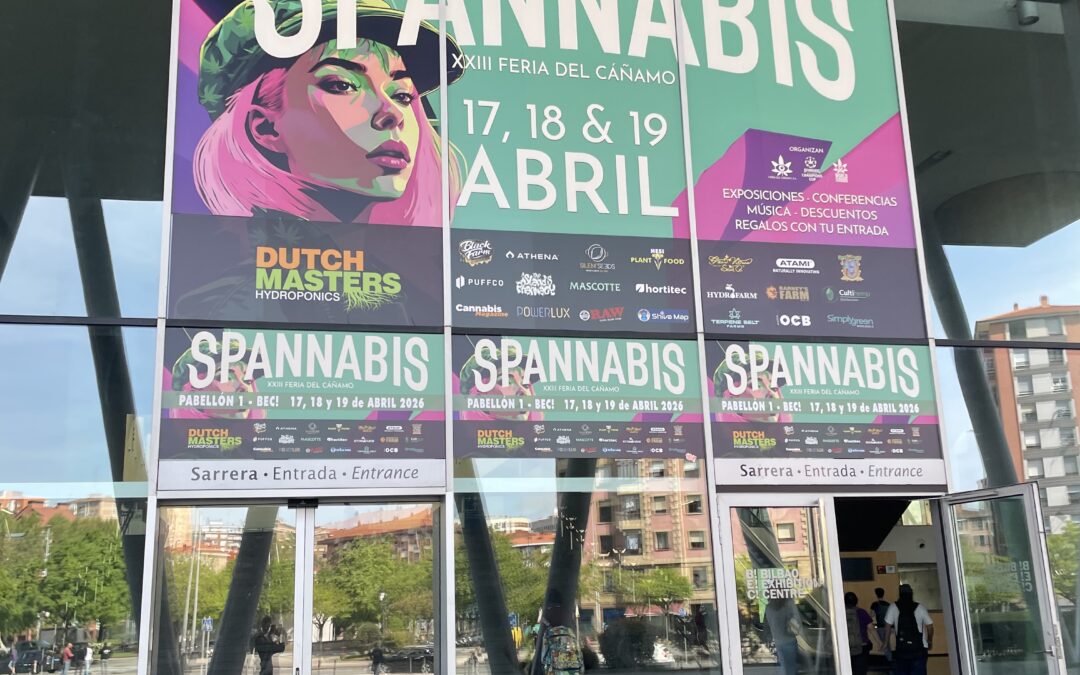
I wasn’t expecting the surprise on people’s faces.
I went to Spannabis Bilbao ready to listen, to observe, to understand where the cannabis sector is right now. What I wasn’t prepared for was how many people reacted to my work with genuine bewilderment. Not scepticism. Not dismissal. Just surprise. “A specialist translator in cannabis? I didn’t know that existed.”
It happened more than once. And every time it did, I realised the same thing: the language problem in this industry is bigger than most companies know — not because they don’t care about language, but because they don’t yet know what they’re losing when they get it wrong.
The Industry Is Growing Faster Than Its Language Awareness
Spannabis Bilbao was the first edition in that city, and it showed exactly how much ground this sector has covered. The conferences were serious. The exhibitors were serious. The conversations were serious. This is not a fringe industry anymore — it’s a business sector with real expansion ambitions, real regulatory challenges, and real international clients.
And yet, when it comes to translation and localisation, many companies are still working with generalist agencies who have never had to explain the difference between cannabis and marihuana in a regulatory context. Or relying on AI tools that will confidently translate porro into a formal product description without blinking.
That is not a technology problem. That is a knowledge problem.
What People Actually Told Me at Spannabis
The conversations I had at the fair were not abstract. Several people described having to educate their current translation providers on basic terminology — that you don’t use porro in an official document, that cannabis and marihuana carry different connotations depending on the market and the context, that a term that is neutral in one country can be loaded in another.
Others told me they were not satisfied with their current translations but couldn’t pinpoint exactly why. The output was technically correct, but something felt off. That “something” is usually register, tone, and cultural fit — the things a generalist translator cannot know because they have not spent time inside this industry.
Several people raised another challenge I hear constantly: the difficulty of managing translations across multiple languages when expanding into new markets simultaneously. It is not just a volume problem. It is a consistency problem. Different vendors, different terminology choices, different tones. The result is a brand that sounds like a different company in every market.
And yes, a few people told me AI would handle all of this. One even laughed.
Why Cannabis Translation Is Not Like Other Translation
I understand the scepticism. Translation looks like a commodity from the outside. Words go in, words come out. If the meaning is roughly preserved, what is the problem?
The problem is that in cannabis, the details are the legal and commercial risk.
This sector sits at the intersection of science, regulation, and culture in a way that very few industries do. The terminology is technical and evolving. The regulatory landscape changes faster than most translation memories can be updated. What is compliant language in Germany may not be appropriate in Spain. What reads as professional in the UK may read as evasive in the US. And the line between educational content and a prohibited health claim can be a single adjective.
A generalist translator working from a dictionary does not have this knowledge. An AI system trained on general language does not have it either — not because the tools are bad, but because this knowledge comes from being inside the sector: reading the regulations, following the legislative changes, understanding what a cannabis compliance officer actually worries about before a product launch.
What I Took Away from Bilbao
I went to Spannabis to learn, and I did. I saw an industry that is innovative, diverse, and moving fast. I attended expert talks that confirmed how much rigour is going into the science and the business side of cannabis. I met people building serious companies with serious international ambitions.
I also saw a clear gap. The companies that will navigate international expansion successfully are the ones that treat language not as an afterthought, but as part of their regulatory and commercial strategy from the beginning. The ones that understand that localisation is not translation — it is rebuilding your message for a new context, with all its legal, cultural, and terminological implications.
The surprise on people’s faces when I told them what I do? I do not take it personally. I take it as information. The market does not know we exist yet. That is not a problem. That is an opportunity.
I will be back at Spannabis next year.
Working with a Cannabis Translation Specialist
If you are an anglophone cannabis company expanding into European markets — Spain, Germany, or beyond — the language decisions you make early will shape how regulators, distributors, and customers perceive you.
Cannaspeaks works exclusively in the cannabis sector. We do not learn your industry on your time. Get in touch to talk about your next market entry.
About the author: Rocío del Amo is the founder and director of Cannaspeaks, a boutique linguistic consultancy specialising exclusively in the cannabis industry. With over 10 years of experience in specialist translation, she works with anglophone companies navigating European market entry.
If you’re a cannabis brand preparing for European market entry, see our cannabis translation specialist services.
This article is for informational purposes only and does not constitute legal or regulatory advice. Cannabis regulations vary by jurisdiction. Always consult a qualified professional before making compliance decisions.
Comentarios recientes