
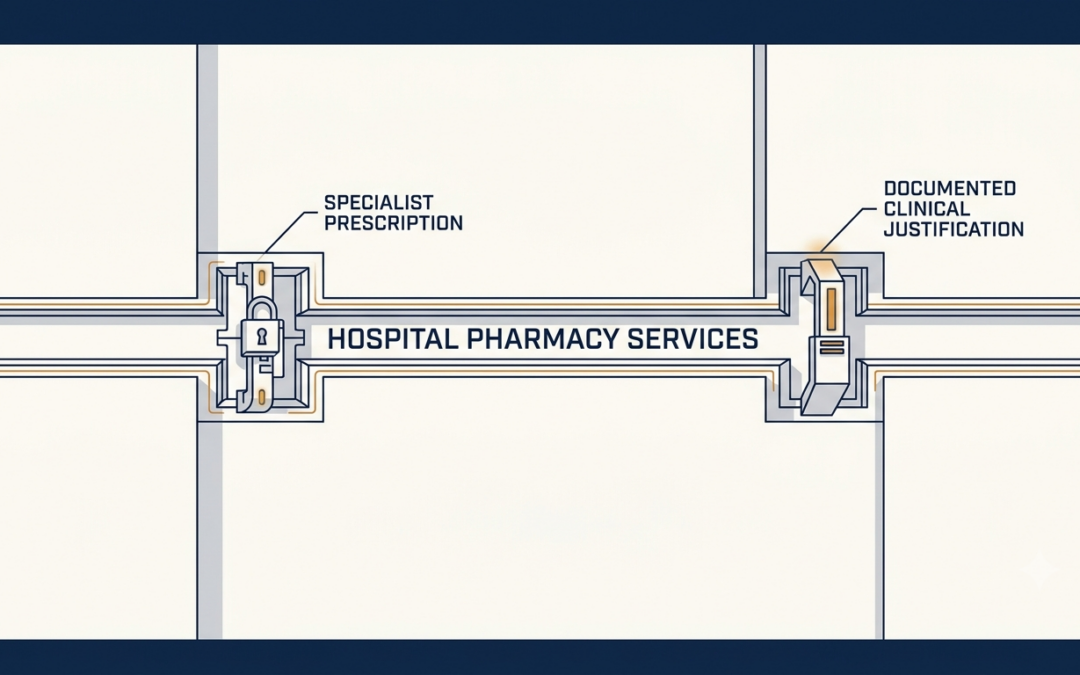
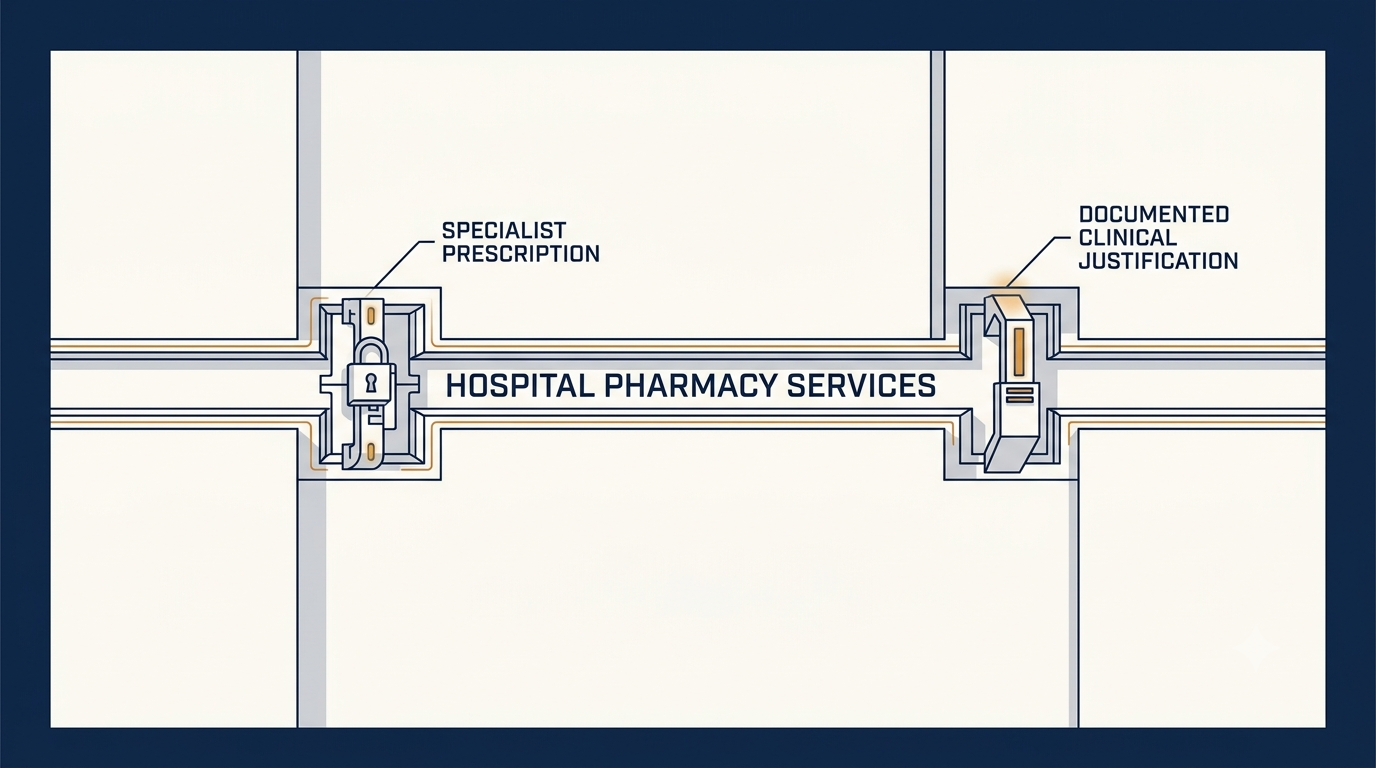
In October 2025, Spain approved Real Decreto 903/2025, its first specific regulatory framework for standardised cannabis preparations. Nine months later, brands are still describing it the way they would describe Germany’s or the Netherlands’ framework — as a market opening. RD 903/2025 builds one narrow clinical channel: standardised formulations, dispensed exclusively through hospital pharmacy services, prescribed only by specialists with documented clinical justification. Everything outside that channel — flower, self-medication — remains outside this framework. For brands translating Spanish-bound documentation, that distinction is the whole compliance question.
What Spain’s medical cannabis framework authorizes
Spain’s regulation authorises standardised cannabis preparations — “preparados estandarizados de cannabis” — as the registered input used to prepare a fórmula magistral tipificada (FMT), a specific pharmaceutical category distinct from an authorised industrially manufactured medicinal product. AEMPS incorporated the first cannabis preparation monograph, FN/2026/FMT/043, an oral solution with THC and/or CBD, into the Formulario Nacional, and opened the Registro de Preparados Estandarizados de Cannabis in January 2026.
Two restrictions define the channel. Elaboration happens exclusively in hospital pharmacy services — no community pharmacy, no private clinic. Prescription is limited to specialists who document clinical justification for that specific patient — no general practitioner route, no self-referral. Compare that to Germany, where Exilby (VER-01) received marketing authorisation in June 2026 and moves through the standard pharmaceutical supply chain once dispensed. Spain’s framework is narrower by design, and the vocabulary reflects it: a “fórmula magistral tipificada” is a different regulatory category from a “medicamento” in the sense EU pharmaceutical translators often default to. Treating the two as interchangeable misrepresents the pathway to the AEMPS-facing reader.
The AEMPS registry structure reinforces this. Each standardised preparation entered into the Registro de Preparados Estandarizados de Cannabis is tied to a specific monograph in the Formulario Nacional, which sets its composition, dosage and prescription conditions. That registry entry, not a marketing claim, is what a hospital pharmacist checks before dispensing. Documentation aimed at that reader has to use the registry’s own terms, not a looser translation that happens to sound equivalent.
For more on how Germany’s and Spain’s regulatory frameworks diverge in practice, see Cannabis Translation in Europe: Why Germany and Spain Speak Different Regulatory Languages.
Why the medical cannabis Spain vocabulary can’t be borrowed from another market
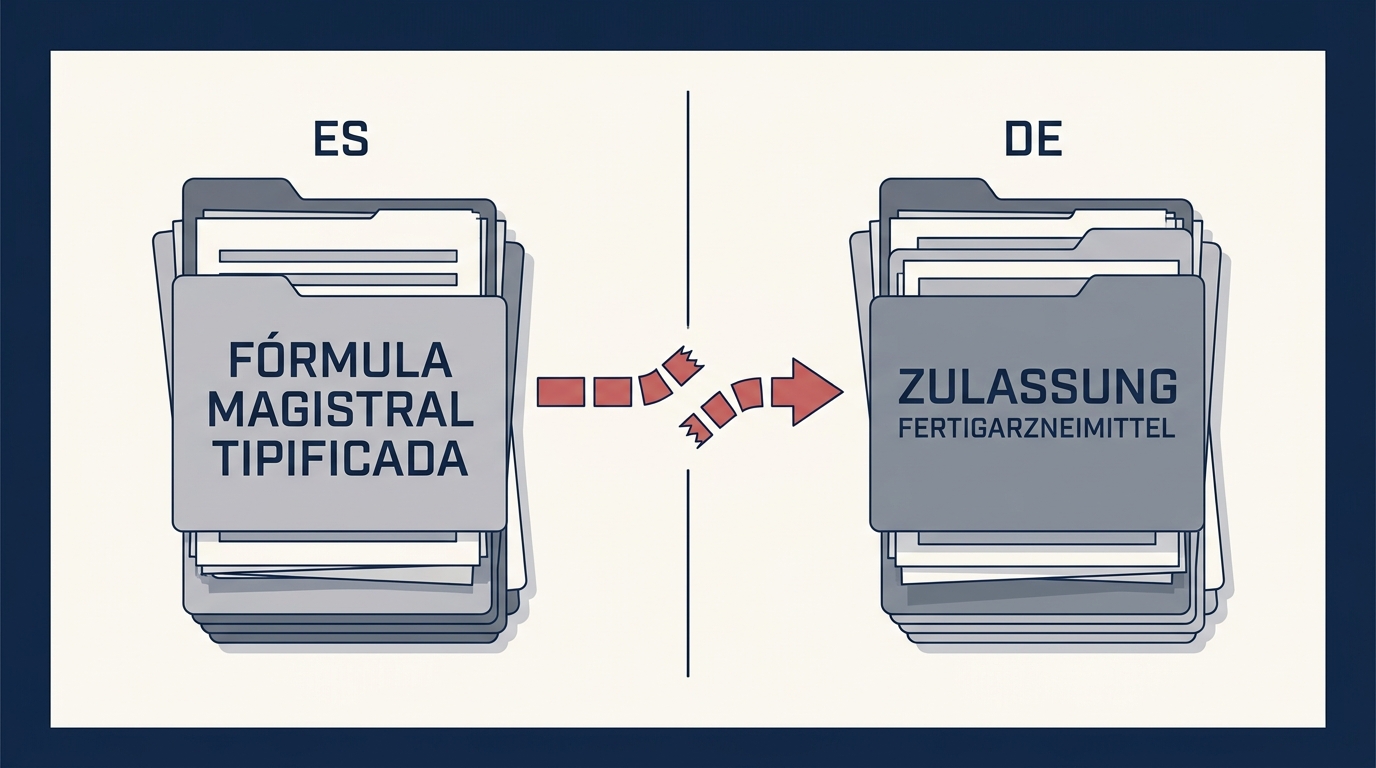
“Preparados estandarizados de cannabis” and “fórmula magistral tipificada” are the exact terms the Formulario Nacional and the AEMPS registry use to define what is legally dispensable in the Spanish system. A translation that renders either as generic “medical cannabis” or “cannabis medication” loses the distinction the regulator built the entire channel around: authorised medicinal product versus standardised cannabis preparation. That distinction determines which hospital pharmacy can dispense the product, which specialist can prescribe it, and which documentation AEMPS expects to review.
A brand operating in Spain and Germany at the same time cannot reuse German pharmaceutical terminology in Spanish-bound regulatory or patient documentation. The two frameworks describe different legal categories of product, built by different regulators, and the vocabulary has to say so precisely — in each language, separately. That is the market-by-market vocabulary problem in practice: a compliance variable tied to which regulator built which category.
On why validated terminology in one EU market doesn’t transfer to another, see Medical cannabis prescriptions in Europe: why your home-market model won’t travel.

What this means for how brands document the Spanish channel
Brands preparing materials for the Spanish channel need three things reflected accurately. First, the product itself: described as an FMT, using the Formulario Nacional’s own category, not as a generic “medicamento.” Then the dispensing model, naming hospital pharmacy services specifically instead of implying a wider pharmacy network. And the prescription pathway, which needs the specialist requirement spelled out rather than a route that reads as open to general practitioners. Marketing materials, patient-facing information, and any documentation destined for AEMPS or a hospital pharmacy service each carry a different kind of risk if this terminology slips — a marketing claim that overstates access, a patient leaflet that implies a prescription route that doesn’t exist, a regulatory submission that uses the wrong product category.
In our own terminology tracking, this is the kind of divergence that rarely shows up as an obvious error. The sentence still reads correctly. It just describes a regulatory pathway that does not exist in Spain.
None of this is a judgment on whether Spain’s channel is too narrow or exactly right. It’s a description of what currently exists in the Real Decreto and the Formulario Nacional, and what has to be reflected accurately in language before a single document reaches a hospital pharmacist or an AEMPS reviewer.
For a brand already active in other EU medical cannabis markets, the practical step is a terminology audit of every Spanish-bound document: does it use “fórmula magistral tipificada” where the Formulario Nacional does, or has it inherited “medicamento” from a template built for a different market’s regulatory category? The answer usually depends on who translated the original documentation, and whether they were working from the Spanish regulatory text or from an equivalent document already localised for Germany or the Netherlands.
The practical takeaway
RD 903/2025 did not open Spain to medical cannabis the way Germany or the Netherlands opened their markets — it built one specific clinical channel, with its own vocabulary and its own restrictions. Brands that translate Spanish documentation using generic “medical cannabis” language, or reuse terminology already validated in another EU market, risk a translation that reads correctly and still describes the wrong pathway. The practical question for any brand active in Spain: does your Spanish-language documentation currently distinguish “fórmula magistral tipificada” from “medicamento” — and does whoever wrote it know why that distinction exists?
This article is for informational purposes only and does not constitute legal advice. Cannabis regulations change rapidly — verify current requirements with qualified legal counsel before making compliance decisions.
Sources
- Real Decreto 903/2025, de 7 de octubre, BOE-A-2025-20077 — https://www.boe.es/diario_boe/txt.php?id=BOE-A-2025-20077
- cannabisregulations.ai — “Spain Draft Royal Decree: Medical Cannabis Prescribers, Products & Timeline” — https://www.cannabisregulations.ai/…
- AEMPS — Formulario Nacional, monografía FN/2026/FMT/043 — https://www.aemps.gob.es/formulario-nacional/monografias/formulas-magistrales-tipificadas/fn_2026_fmt_043.pdf
Comentarios recientes